





How Are Paper Cups Made? The Step-by-Step Industrial Manufacturing Process
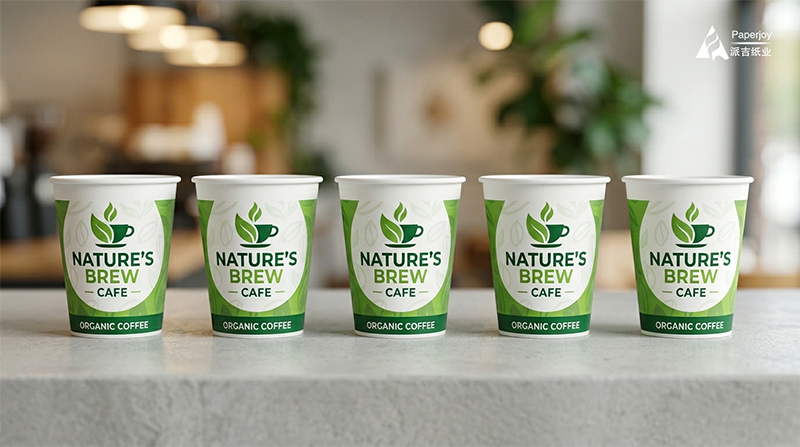
paper cups are manufactured through a highly automated process by coating food-grade virgin paperboard with a protective PE barrier, die-cutting it into blanks, and using high-speed forming machines to seal the side seams, attach the bottom, and curl the top rim.
The manufacturing of modern paper cups is a highly automated, precision-driven engineering workflow. For downstream cup-forming factories, the structural rigidity, leak-free performance, and food-safety compliance of the final cup depend entirely on the quality of the upstream Coated Paperboard and die-cut blanks.
As a premier global supplier of food packaging raw materials, Nanning Paperjoy Paper Industry Co., Ltd. breaks down the complete, end-to-end manufacturing process of a modern paper cup—from raw wood fiber to the secure container in your hand.
Phase 1: Upstream Raw Material Engineering & Precision Converting
The foundation of any high-quality paper cup lies in the technical specifications of its raw materials.
- Base Paperboard Selection & Grammage (GSM) Grading
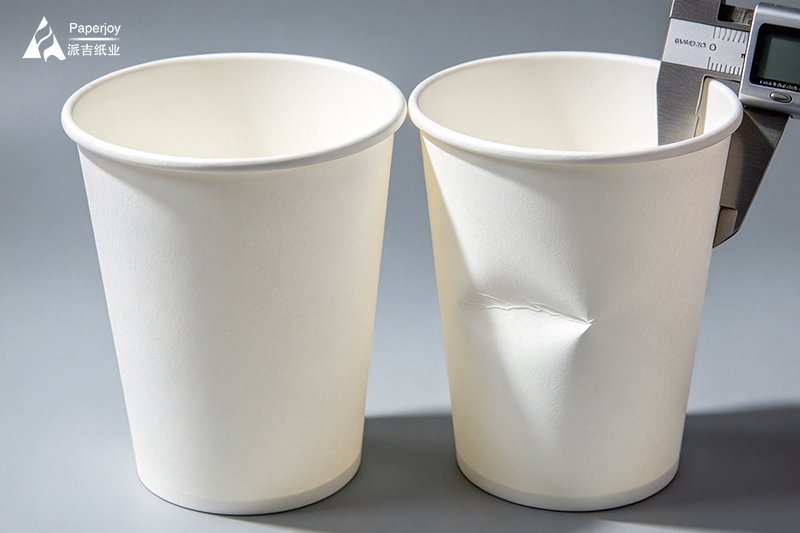
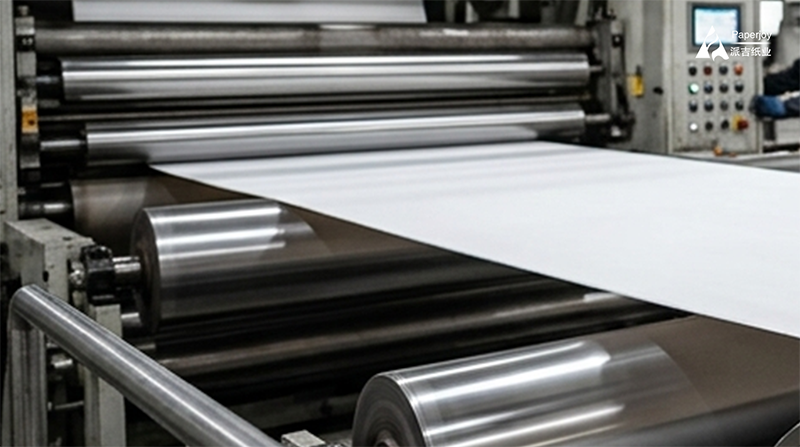
Industrial Paper cups strictly utilize food-grade virgin wood pulp Cupstock Paper. The use of recycled pulp containing fluorescent whitening agents is legally prohibited. The material’s thickness and weight are carefully categorized by application:
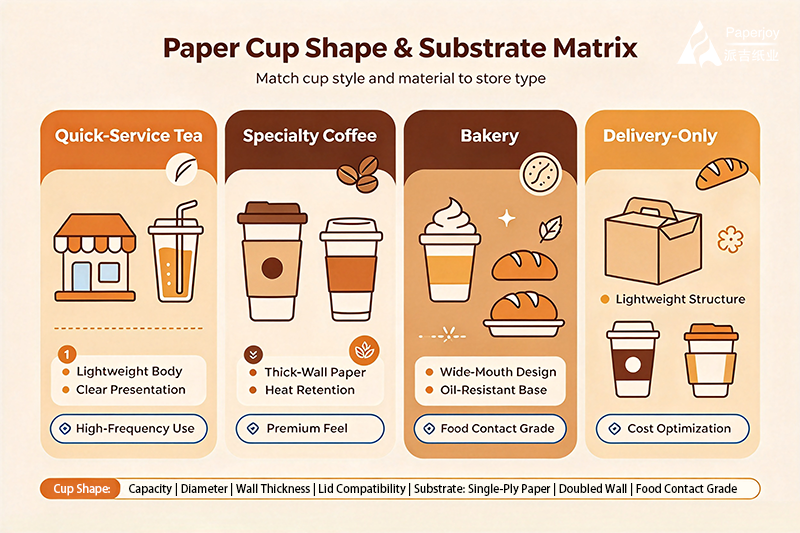
Hot Drink Cups: Typically utilize 150–320 gsm paperboard to balance thermal insulation with optimal hand-hold rigidity.
Cold Drink & Smoothie Cups: Utilize 280–350 gsm heavy-gauge materials to prevent the cup from collapsing in high-humidity and low-temperature environments.
Sustainability: Paperjoy offers FSC-certified (Forest Stewardship Council) materials, ensuring 100% timber origin traceability for green supply chains.
- Core Barrier Technology: PE Extrusion Coating
To prevent liquid absorption, the paperboard must be treated with a barrier. PE Coated Paper remains the global industry standard due to its exceptional physical stability and cost-efficiency.
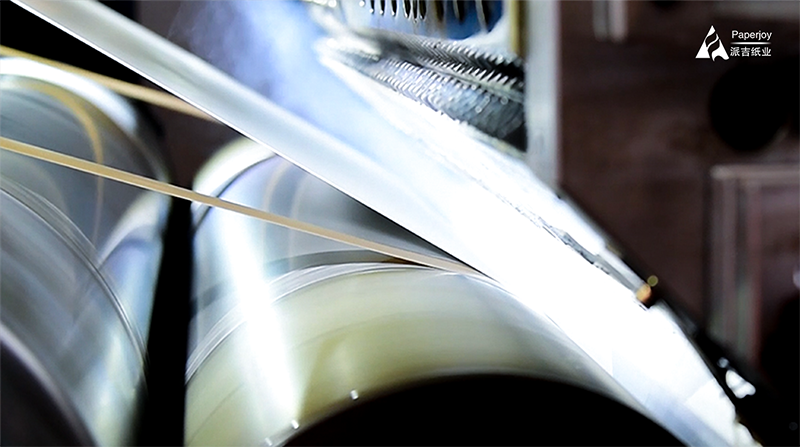
Food-grade PE pellets are melted at 200°C–350°C and uniformly extruded directly onto the paper web, forming a micro-barrier (0.01–0.03mm thick). This is configured in two primary ways:
Single-Side PE Coating: Coated exclusively on the inside. This is the highest-volume specification globally, engineered specifically for hot drinks (up to 90°C).
Double-Side PE Coating: Coated on both the inner and outer surfaces. This configuration is essential for cold drinks; the outer PE layer prevents atmospheric condensation (“sweating”) from soaking into the paperboard, keeping the cup stiff and structurally sound.
- Eco-Friendly Flexographic Printing & Precision Die-Cutting
To streamline downstream production, Paperjoy executes printing and converting in-house with exact technical tolerances:
Flexographic Eco-Friendly Printing: Utilizing food-grade, water-based inks, Paperjoy prints custom branding via high-speed flexo presses. The cured materials comply strictly with FDA, ISO 9001, and SGS standards regarding global migration limits.
Strict Dimensional Tolerances: We maintain the dimensional tolerance for Fan-shaped Cup Blanks strictly within ±0.5mm and Paper Cup Bottom Roll widths within ±0.3mm. This high precision prevents downstream machine jams and structural leaks.
Phase 2: Downstream High-Speed Cup Forming
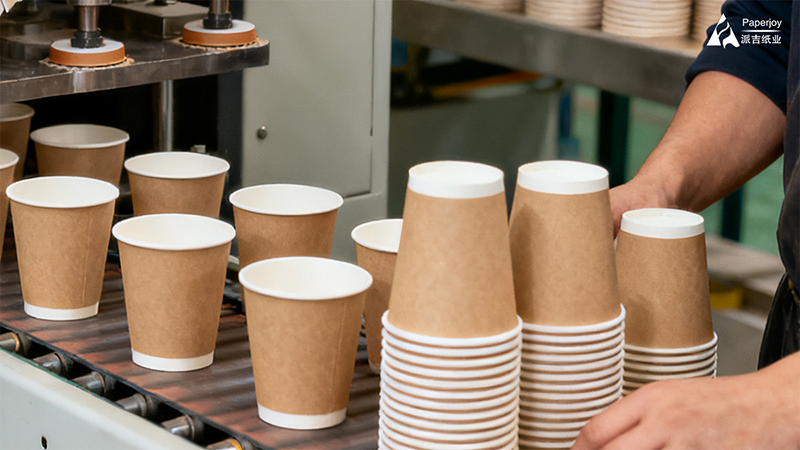
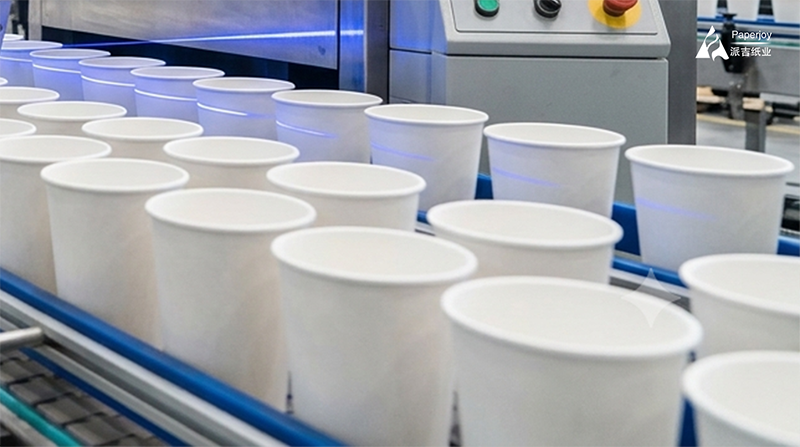
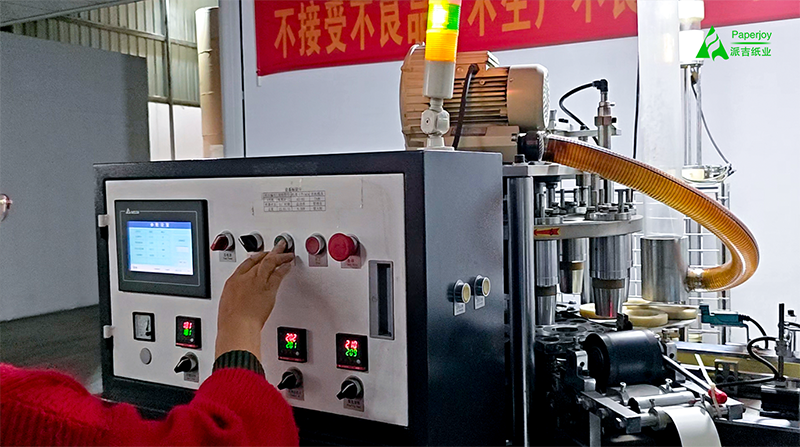
Once the moisture-proof wrapped Paper Cup Fan Blanks and paper Cup Bottom Roll Materials arrive at the downstream factory, automated machinery takes over. High-speed lines operate stably at 50 to 160 cups per minute (with high-end servo models reaching up to 260 cups per minute), seamlessly executing four final steps:
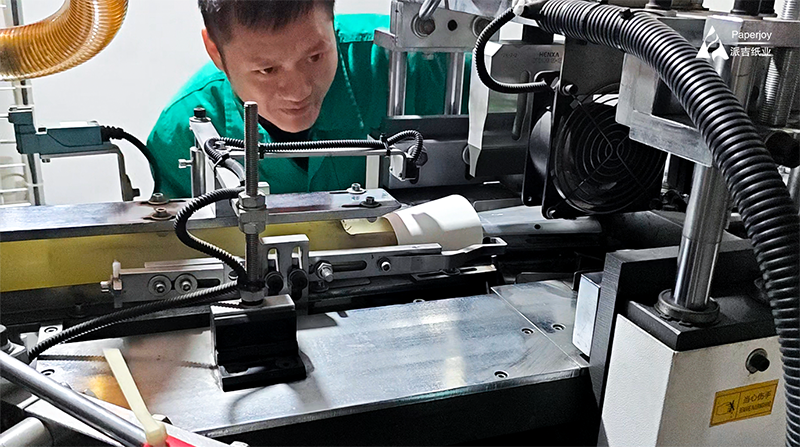
Step 1: Side Seam Sealing: The fan-shaped cup blank is wrapped around a conical mandrel. The overlapping edge is fused instantly using hot air (180°C–220°C) or high-efficiency ultrasonic welding, creating a permanent, leak-proof bond without adhesives.
Step 2: Bottom Attachment & Knurling: The bottom paper is punched into discs from the roll and fed into the base of the cup body. The lower lip of the wall folds inward around the disc, and a high-speed rotating knurling tool applies heat and intense mechanical pressure to forge a 100% hermetic seal.
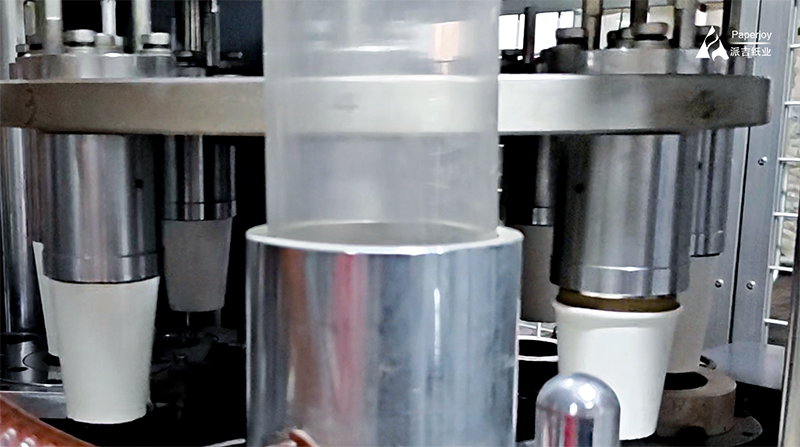
Step 3: Top Rim Curling: The top edge of the cup body is guided through specialized forming dies, rolling the paperboard outward into a smooth, tight, multi-layered rim. This enhances the cup’s lateral hoop strength and ensures a comfortable, burr-free drinking edge.
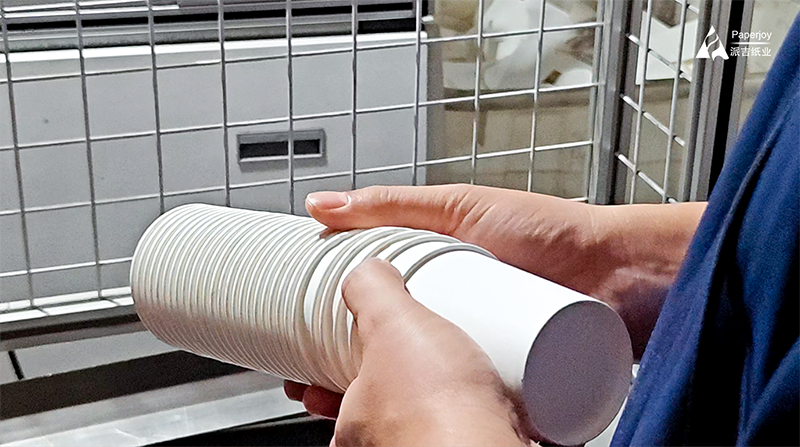
Step 4: Automated Vision Inspection (CCD): Finished cups pass under high-speed optical sensors. The system instantly identifies and pneumatically rejects any pieces with dark spots, rim deformations, or faulty bottom seals.
Conclusion
From raw wood fiber to a premium coffee shop counter, paper cup quality is defined by the precision of its raw material origin. Partnering with a professional packaging raw material manufacturer like Paperjoy—fully certified under GB 4806.8, FDA, ISO 9001, FSC and SGS, and backed by comprehensive lot sample retention systems—is the strategic foundation for global cup-forming factories to eliminate scrap rates and secure top-tier brand clients.
Contact Information:
E-mail:info@nnpaperjoy.com
Call Us:0086-0771-4925950
Whatsapp | WeChat:0086-14795799575