






Paper Cup Raw Material Grammage and Stiffness Engineering: From Base Paper to PE Coating
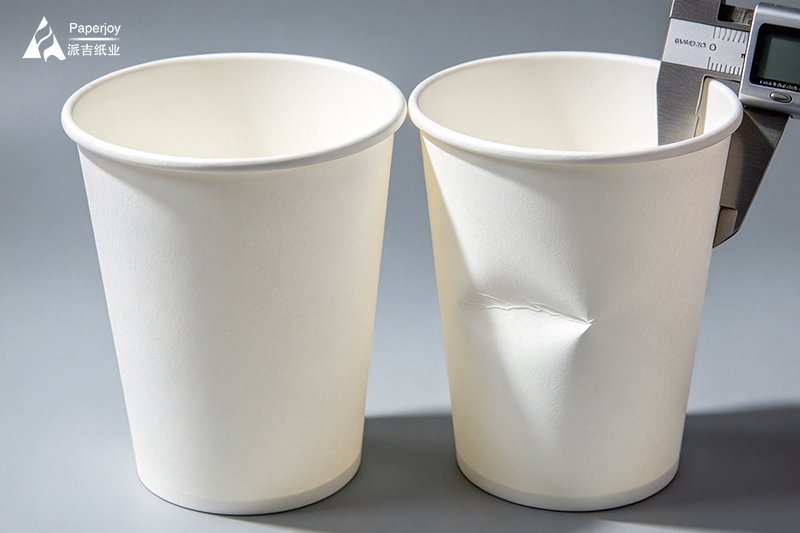
Buyers often judge paper cup raw material by thickness and hardness, yet the two variables that actually decide cup-wall performance — base paper grammage and stiffness, plus PE coating weight — are exactly the details most quotes leave out and most suppliers quietly swap. Two cups can share the same drawing and the same “PE Coated Paper cup” label, yet one feels rigid and the other collapses at a squeeze; one holds hot americano without a hitch, the other weeps through the wall after thirty minutes of iced latte. This article skips coating chemistry and breaks cup-wall performance into numbers a buyer can read and verify before signing.
Why two “identical” PE coated cups feel completely different
A cup wall is essentially base paper plus one or two PE film layers. Visually both are white board with a printed logo, but the base paper substance (grams per square meter, gsm) can range from 170 to 350, and the PE coating weight can run from 15 to 25 gsm or more. Drop both numbers and the cost looks great, but wall stiffness, leak resistance and heat performance fall together — that is the real source of “same spec, different fate”. For a buyer, a parameter with no So What is useless: within the same cup size, any variance in base paper gsm moves cup weight and stiffness, and with them converting yield and stack stability. What matters at acceptance is not a supplier saying “we use good paper” but whether he can write those numbers into a test report.
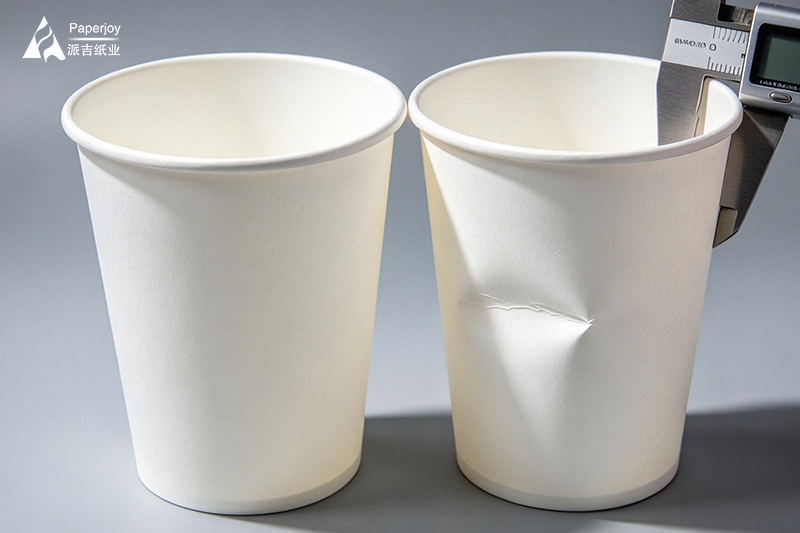
paper cup raw material grammage stiffness comparison
How base paper grammage decides wall stiffness — and eats your cost
The substance of cup-grade base paper (also called cupstock or paper cup raw material) is the deepest lever on wall stiffness. Keep the category straight: here cupstockmeans the food-contact paper substrate, not folding carton or corrugated. Per the China Cupstock Base Paper Market Research (2026, inwwin.com.cn), China’s cupstock market reached about RMB 48.5 billion in 2026, up about 4.2% year on year; the share of output compliant with GB/T 16718 rose to 68% (per the 2026 inwwin.com.cn report), 15 points above the same period in 2023; self-sufficiency is projected to pass 92% by year end; the foodservice channel alone takes about 1.8 million tonnes, 45% of demand (per the same 2026 inwwin.com.cn market research). Two takeaways for buyers: compliant, high-end cupstock is rapidly replacing low-grade capacity, and domestic supply is mature enough that “imported equals better” no longer justifies a premium. Practically, within the same cup size, raising grammage one step lifts wall stiffness, compression and stack stability at the cost of higher per-Cup Paper cost; pushing grammage too low saves paper money that comes back doubled in converting losses and leak complaints.
PE coated paper roll and paper cup bottom roll are typically offered across the 170–350 gsm range so the substance can be matched to cup type and filling scenario instead of “soft to save paper”.
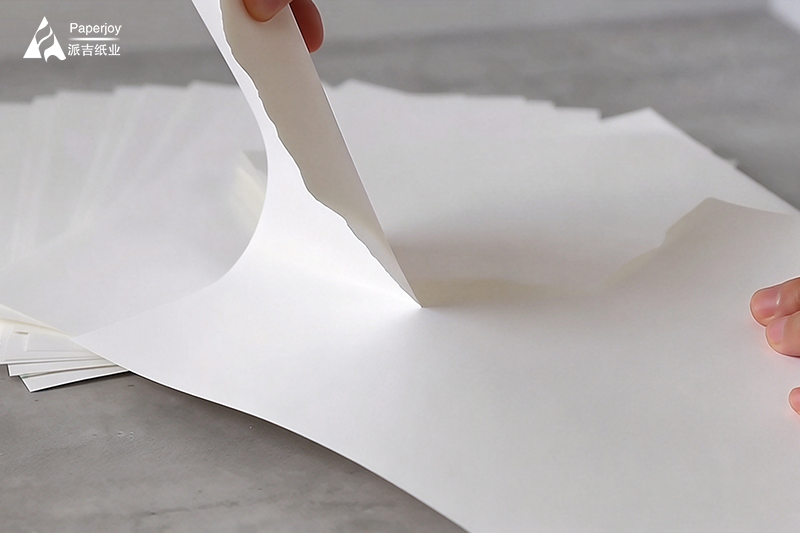
cupstock base paper PE coating cross section
PE coating weight: the three-way trade-off of leak, stiffness and recyclability
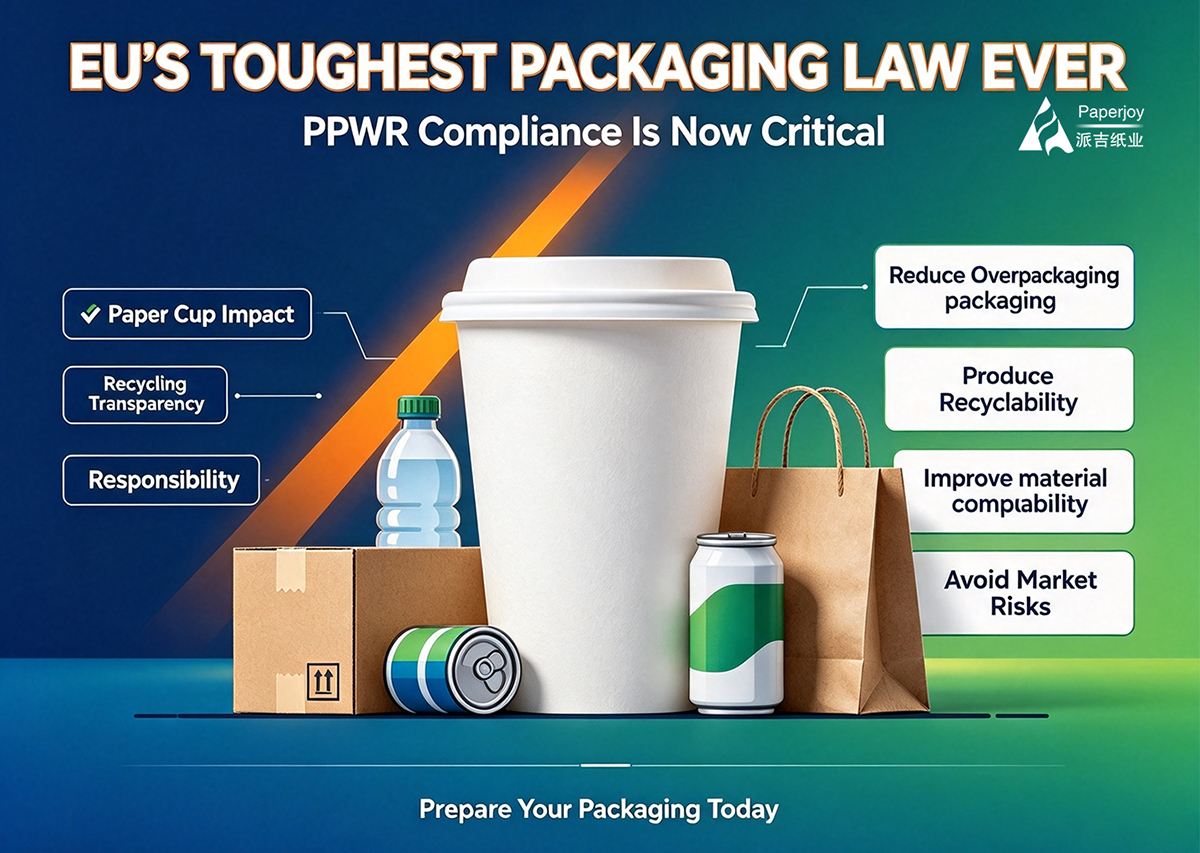
The PE layer turns paper into a liquid container. Single-side PE is common on hot cups (one inner PE layer blocks liquid); double-side PE is common on cold cups, ice cream and frozen applications where both sides must resist moisture — this is the routine pairing of cup type and coat side, while the actual heat resistance should be confirmed against the specific batch’s third-party test report, per Paperjoy’s current supply terms. Coating weight (gsm) is a balancing act: thicker coating means more stable leak resistance and less low-temperature brittleness, but the lower the fibre ratio, the harder the paper is to de-plasticise at recycling, and the more it fights the mono-material, easily-recyclable direction. The EU PPWR (Regulation (EU) 2025/40) has been fully applicable since 2026-08-12, writing recyclability grading into hard targets, and North America is widening too — per Circular Materials Alberta and the City of Edmonton October 2026 notice, coffee cups entered the municipal recycling list on October 1; per Tompkins County New York 2026 guidelines, paper cups joined curbside recycling on July 1. As downstream recycling access rises, buyers must weigh coating weight against “can it be recycled”, not just leak-proofing.
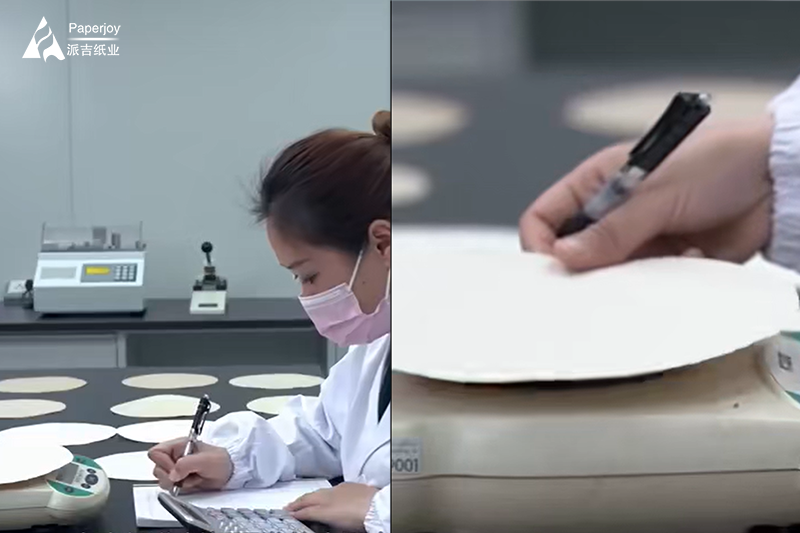
cup paper stiffness cobb internal bond test
Three acceptance tables: stiffness, Cobb and plybond
Translate “feel” into verifiable numbers; the three items below are the most actionable for buyers. Values follow Paperjoy’s regular supply specifications and common industry testing; each order should be confirmed against the batch’s SGS or equivalent report.
Test item Meaning Routine cup-board target Testing basis Stiffness Resistance to bending, decides “does it squeeze” Rises with grammage for mid-high gsm cups Paper mill QC and SGS test Cobb absorption Water taken up per area, decides weeping and dampness Lower is steadier for food-contact cup paper GB/T 1540 and SGS test Plybond Inter-layer bond strength, decides cup burst and delamination Higher resists delamination SGS and paper mill test Beyond these three, brightness (ISO brightness %) affects print look, and surface strength decides whether flexo printing drops lint and fills in. What the buyer must do is have the supplier list each item in the batch report instead of a bare “qualified” verdict.
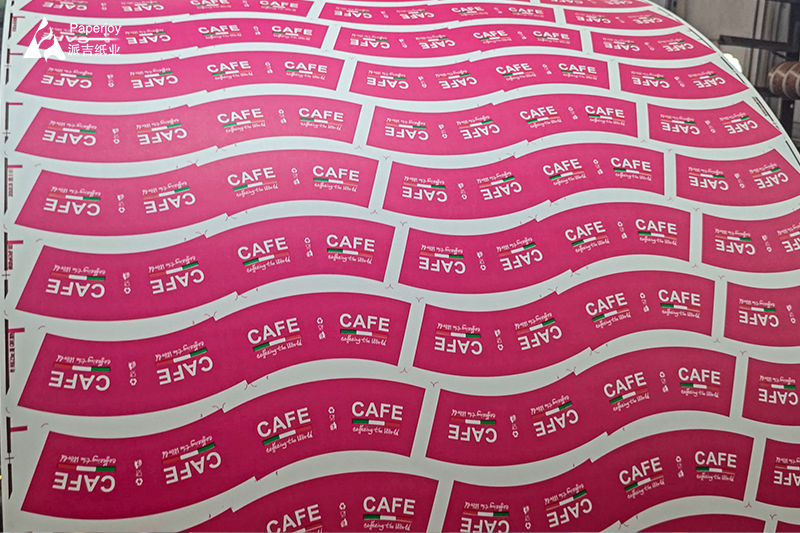
flexo printing die cutting cup fan precision
Printability and die-cut precision: why the same paper prints muddy or cuts burrs
Passing wall performance is not the same as a good-looking, well-formed cup. Printability has two faces: surface smoothness and surface strength — poor smoothness leaves white spots on solid fills, weak surface strength drops lint and fills in plates under high-speed flexo water-based ink. The second is die-cut precision — the paper cup fan is the irregular blank cut from the sheet; worn dies and misalignment leave burrs on the fan edge and misaligned side seams, forcing the cup converter to trim and lose yield. Paperjoy applies flexo printing plus high-precision die-cutting on paper cup fan and PE coated paper roll to keep print and cut tolerances controllable and cut the converter’s rework. One reminder: printing and coating on food-contact paper must clear migration safety — FDA 21 CFR 176.170 sets the migration conditions for food-contact paper, and coating and ink compliance is the precondition for a cup that is “usable”, not optional.
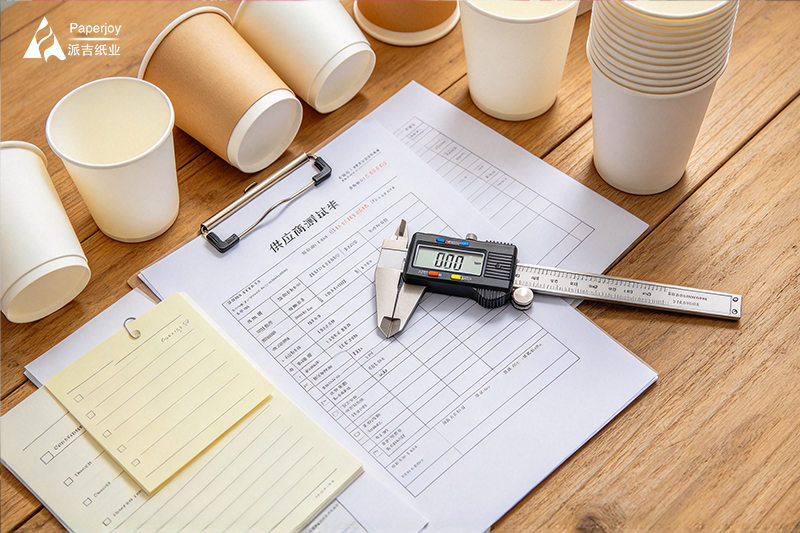
paper cup buyer acceptance checklist flatlay
Package the logic into one low-threshold move: before ordering, ask the supplier to show these five numbers on the spot, and don’t sign if any is missing. ① Base paper grammage and its negative tolerance — confirm it is not “300 on paper, 280 in hand”. ② PE coating weight — confirm single or double side matches the label. ③ Stiffness reading — check against the cup-type requirement. ④ Cobb absorption — confirm weep risk is controlled. ⑤ Plybond and migration test report — confirm no burst and no over-migration. Paperjoy’s current supply terms support providing SGS or equivalent batch test-report samples, so a buyer can send this checklist to any supplier and tell in minutes whether they “really have data” or “only quote”. Cup-wall performance is no mystery: pin down grammage, stiffness and coating weight, and the soft cup and the weeping cup disappear from your line.
Contact Information
E-mail: info@nnpaperjoy.com
Tel: 0086-0771-4925950 WhatsApp/WeChat: 0086-14795799575
Web: www.paperjoypaper.com