

Picking the right suppliers for 2026? It’s not just about comparing prices or where the mill sits. uncoated cupstock Paper has to run smoothly through printing, forming, sealing, and filling—no drama. A supplier you can count on should deliver stable basis weight, clean formation, consistent moisture, and reels that perform the same way every time. Even tiny variations can lead to curling, cracking, or uneven coating during converting.
David Luttenberger, Global Packaging Director at Mintel, put it well: “Packaging Performance must support sustainability, not compete with it.” That idea really matters when you’re evaluatingUncoated Cupstock Base Paper. You’ll want to look at fiber sourcing, recycled content, food-contact documentation, barrier compatibility, and the supplier’s technical support. Certifications can look impressive, sure. But actual converting results? Those matter way more.
This guide looks at leading suppliers through a practical purchasing lens. We consider production capacity, quality control, delivery reliability, customization, and environmental transparency. Some mills offer great paper but limited regional service. Others respond fast yet give you less consistent technical data. That difference is easy to overlook.
Real factory trials are a must. Test the paper on your own forming line. Check stacking, rim strength, ink adhesion, and cup leakage after filling. No supplier is perfect. Even strong candidates may come up short on lead times, documentation, or minimum order quantities. A careful shortlist should call out those limitations—not hide them.
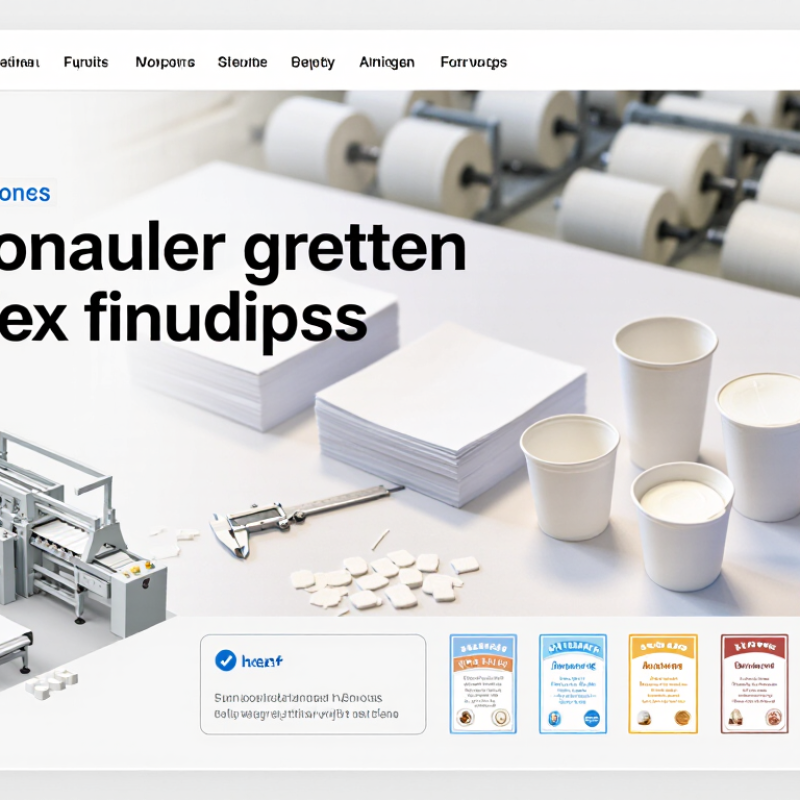
What Is Uncoated Cupstock Paper?
Uncoated cupstock paper is food-contact paperboard designed for forming cups without a conventional plastic film layer. Its surface remains paper-based, so fiber selection, refining, sizing, and drying control liquid resistance. “Uncoated” does not always mean untreated. Some grades use internal sizing or water-based surface treatments.
The material must balance stiffness and flexibility. A typical cupstock grade may use 180–350 g/m² basis weight, depending on cup size and forming equipment. Its Cobb value, porosity, smoothness, and moisture profile affect sealing and print quality. A rough sheet can produce weak seams. Excessive sizing may reduce bonding. Small differences matter.
CEPI reported European paper and board production at about 79.5 million tonnes in 2023, showing the scale of the fiber industry. The Food and Agriculture Organization also tracks global paper and paperboard output above 400 million tonnes annually. These figures provide useful context, but they do not prove cupstock suitability. Buyers still need migration documentation, fiber traceability, batch testing, and pilot forming trials.
For 2026 supplier evaluation, ask for technical data sheets and recent test results. Check stiffness after moisture exposure. Test rim cracking, leakage, odor, and recyclability claims. Laboratory results can look perfect. Factory conditions may disagree. Supplier comparisons should therefore include machine trials, not only price and certificates.
2026 Top Uncoated Cupstock Paper Suppliers? – What Is Uncoated Cupstock Paper?
| Evaluation Dimension | Typical Industry Data | Why It Matters for Cupstock | Recommended Verification |
|---|---|---|---|
| Product definition | Uncoated cupstock is paperboard supplied without a factory-applied plastic, bio-based polymer, wax, or dispersion barrier coating. | It provides the fiber-based structure for cups and is normally coated or laminated later when liquid resistance is required. | Confirm the absence of coating, extrusion, wax, and surface-treatment layers in the technical data sheet. |
| Common basis weight | Approximately 170–350 g/m² for many cup and food-service paperboard applications. | Basis weight influences stiffness, forming performance, material consumption, and finished-cup feel. | Request measured basis-weight results according to ISO 536 or an equivalent national standard. |
| Fiber composition | Food-contact cupstock is commonly made from bleached primary fiber; recycled fiber may be available for selected non-direct-contact or compliant applications. | Fiber selection affects strength, odor, cleanliness, brightness, and regulatory suitability. | Check fiber origin, recycled content, bleaching process, odor testing, and food-contact declarations. |
| Stiffness and caliper | Higher caliper and stiffness generally improve cup-wall rigidity, while excessive stiffness can affect forming and die cutting. | A balanced structure helps prevent deformation during blanking, side-seam forming, and stacking. | Review caliper, bending stiffness, compression behavior, and production-trial results. |
| Moisture content | Paperboard is hygroscopic; commercial specifications often control moisture within a narrow range, commonly around 4–8%, depending on grade and test conditions. | Moisture variation can cause curl, dimensional changes, feeding problems, and unstable forming. | Require moisture test results, conditioning conditions, and storage recommendations. |
| Surface properties | Smoothness, roughness, porosity, and surface energy vary by grade and affect printing, coating adhesion, and converting. | Uncoated stock must accept later printing or barrier coating without excessive absorption or pinholing. | Check Bendtsen or PPS roughness, Cobb values, air permeance, and print/coating trial data. |
| Water absorption | Uncoated paperboard absorbs water; Cobb60 results depend on furnish, sizing, and intended use. | High absorbency can improve coating anchorage but may reduce resistance to condensation or liquid contact before barrier application. | Request Cobb test data using ISO 535 and define the required test side and time. |
| Brightness and appearance | High-brightness bleached paperboard is widely used where clean appearance and accurate printing are required. | Stable brightness and shade support consistent branding and reduce color variation between production lots. | Review ISO brightness, whiteness, opacity, shade tolerance, and retained lot samples. |
| Roll and sheet formats | Available formats commonly include reels and sheets, with width, diameter, core, length, and sheet size customized to converting equipment. | Correct dimensions minimize trim waste, machine stoppages, and setup time. | Confirm roll-width tolerance, core size, winding direction, sheet squareness, and packaging method. |
| Printability | Uncoated cupstock can be printed using suitable flexographic, offset, or other converting-compatible processes, subject to ink and surface requirements. | Good ink holdout and controlled absorption improve image sharpness, drying, and rub resistance. | Conduct press trials and verify ink compatibility, migration compliance, drying, and odor performance. |
| Food-contact compliance | Applicable requirements may include FDA food-contact regulations, EU Framework Regulation (EC) No 1935/2004, EU GMP Regulation (EC) No 2023/2006, and relevant local standards. | Compliance must cover the paper, additives, processing aids, inks, and any later-applied barrier system. | Obtain a current declaration of compliance, supporting test reports, and intended-use limitations. |
| Sustainability documentation | Relevant evidence may include chain-of-custody certification, recycled-fiber documentation, mill environmental data, and responsible sourcing policies. | Documentation supports procurement claims and helps distinguish fiber sourcing from end-of-life recyclability. | Verify certificate scope, validity, product coverage, recycled content, and claim wording. |
| Quality consistency | Key controls include basis weight, caliper, moisture, brightness, roughness, curl, defects, and dimensional tolerances. | Stable quality is essential for high-speed die cutting, cup forming, printing, and barrier coating. | Request a certificate of analysis for each lot, inspection standards, defect limits, and corrective-action procedures. |
| Supply capability | A suitable supplier should demonstrate repeatable production capacity, stable raw-material sourcing, export packaging, and documented lead-time control. | Cup manufacturers often require dependable replenishment and consistent specifications across multiple shipments. | Evaluate monthly capacity, minimum order quantity, standard lead time, safety stock, and contingency planning. |
| Best supplier-selection approach for 2026 | Prioritize verified technical performance, food-contact documentation, consistent quality, responsible fiber sourcing, logistics reliability, and total delivered cost rather than price alone. | The best supplier is the one that matches the required forming process, barrier system, regulatory market, sustainability target, and delivery schedule. | Use samples, laboratory testing, production trials, document audits, and a written quality agreement before commercial approval. |
Note: Uncoated cupstock paper provides the fiber substrate only. Liquid resistance, grease resistance, heat-sealability, and final recyclability depend on the subsequent coating, converting process, use conditions, and applicable local regulations.
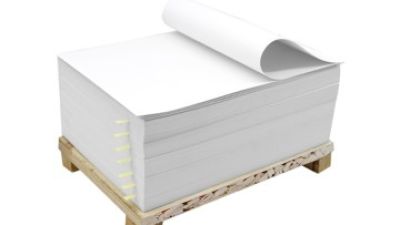
Professional China Jumbo Paper Rolls: High-Brightness C1S Ivory Board with PE Coating by Paperjoy
Professional China jumbo paper rolls are designed for converters and packaging manufacturers seeking high-brightness C1S ivory board with a dependable PE coating. The smooth coated side provides a clean, uniform surface for sharp printing, vivid colors, and fine graphics, while the ivory board structure offers good stiffness and a premium tactile finish. Its bright appearance helps packaging designs stand out on shelves and supports consistent visual quality across large production runs.
The PE coating improves resistance to moisture, grease, and liquid penetration, making the material suitable for disposable food containers, beverage cups, takeaway packaging, pharmaceutical cartons, and other applications requiring added protection. Jumbo roll formats help optimize production efficiency by reducing roll changes and supporting continuous processing on high-speed converting equipment. Available in different grammages, widths, and coating specifications, the paper can be adapted to die-cutting, folding, printing, and forming requirements.
Strict control of basis weight, brightness, coating uniformity, roll winding, and edge quality helps maintain stable performance during converting. The material can also be supplied with packaging designed to protect it from humidity, dust, and handling damage during transportation and storage. Its balance of printability, rigidity, and barrier performance makes it a practical choice for manufacturers developing attractive and functional paper-based packaging.
FAQS
Request the forest region, mill location, pulping method, and recycled content. Ask for chain-of-custody records and current independent audit reports. Vague claims need closer review.
Check for dust, damaged edges, and uneven formation. These defects can affect converting, printing, and material waste. Small flaws matter.
Ask for water use, energy intensity, and production emissions. The data should show reporting periods and measurement boundaries. Without those details, comparisons become uncertain.
Suppliers should screen forestry partners for habitat damage and poor labor conditions. They should also verify harvesting practices at the site level. Regional sourcing may reduce transport distances, but it is not automatically sustainable.
Quotations may range from 850 to 1,350 USD per metric ton. Fiber quality, basis weight, recycled content, freight, and energy charges affect pricing. The final cost may change.
Standard grades may require 20 to 25 metric tons. Custom grammage, special sizing, or printed reels may require 50 metric tons or more. Some regional mills offer 300 to 1,000 tons monthly. Larger producers may allocate several thousand tons.
Request three comparable samples. Confirm grammage tolerance, reel width, moisture level, and food-contact documents. Check whether pallets, inland transport, and export packaging are included. Specification sheets alone are not enough.
Ask about actual available capacity and maintenance-related delays. Review recent test data, lead times, payment terms, and delivery conditions. Recheck forecasts before accepting fixed-volume commitments. The cheapest ton can still create rejected rolls and production delays.
Conclusion
This guide explains how to identify reliable Uncoated Cupstock Paper suppliers in 2026. It introduces the material, its typical use in paper cup production, and the performance factors that matter most, including stiffness, moisture resistance, printability, formation quality, and compatibility with different forming processes. It also outlines how to compare suppliers by product consistency, technical support, production capacity, delivery reliability, certifications, and communication.
The article reviews common product grades and customization options, such as basis weight, sheet or reel formats, coating-free fiber choices, and packaging requirements. It also discusses responsible fiber sourcing, recycling considerations, sustainability standards, pricing structures, minimum order quantities, and supply flexibility. By weighing product quality, environmental practices, total cost, lead times, and long-term capacity, buyers can select an Uncoated Cupstock Paper supplier that matches their application, budget, and growth plans.
Related Posts
-

10 Best PE Coated Cup Stock Paper Suppliers in 2026
-
China Top Cupstock Manufacturers for Global Buyers
-

How to Choose the Perfect Paper Box for Your Packaging Needs
-

Top Paper Cup Raw Material Suppliers for Global Buyers?
-

China Best Wood Pulp Pe Coated Paper for Global Buyers?
-

“The Future of Eco-Friendly Paper Cup Fandom: Innovations in Sustainable Design”