

How to Choose a Reliable Paper Cup Raw Material Factory?
Table of Contents
- Define the Role of a Paper Cup Raw Material Factory
- Identify Required Paper Cup Material Specifications
- Evaluate Factory Certifications and Production Standards
- Check Raw Material Quality and Safety Controls
- Assess Manufacturing Capacity and Supply Reliability
- Compare Pricing, Customization, and Customer Support
- FAQS
- Conclusion
- Related Posts
Honestly, picking a reliable paper cup raw material factory starts with proof. Not pretty brochures. Not the lowest quote either.
And there’s a reason this decision gets so much attention. Industry reports keep pointing to it. Smithers’ packaging outlook names foodservice packaging as a sector under growing pressure around sustainability and traceability. Grand View Research ties Paper Packaging growth to rising demand for recyclable, fiber-based options. But these trends don’t just affect how a cup looks. They shape coating choices, fiber sourcing, how stable production is, and even export paperwork. So a factory should be able to explain its material choices clearly. If the answers feel vague, dig deeper.
Next, look for operating experience you can actually verify. Ask if the factory makes food-contact paperboard on a regular basis—not just when orders spike. Request recent test reports for grammage, moisture, stiffness, coating adhesion, and heat resistance. A sample should be useful, too: it ought to hold up to stacking, sealing, hot filling, and transport. Small things matter here. Check the roll edge. Look at coating uniformity. Note any odor after forming. These simple checks often expose process weaknesses faster than a slick presentation ever will.
If you’re buying professionally, also review FSC Chain of Custody records, ISO 9001 procedures, and any relevant food-contact declarations. The factory should be able to name its pulp source, coating supplier, batch number, and corrective-action process. CEPI stats and FAO forestry data can give useful context on paper production and fiber supply, sure—but they can’t validate one specific supplier. That’s an important limit. No checklist is perfect. A dependable Paper Cup Raw material factory tends to combine documented compliance, repeatable testing, transparent communication, and delivery promises that are actually realistic. In the end, choose the partner that can prove consistency when things get tough.
Define the Role of a Paper Cup Raw Material Factory
How to Choose a Reliable Paper Cup Raw Material Factory?
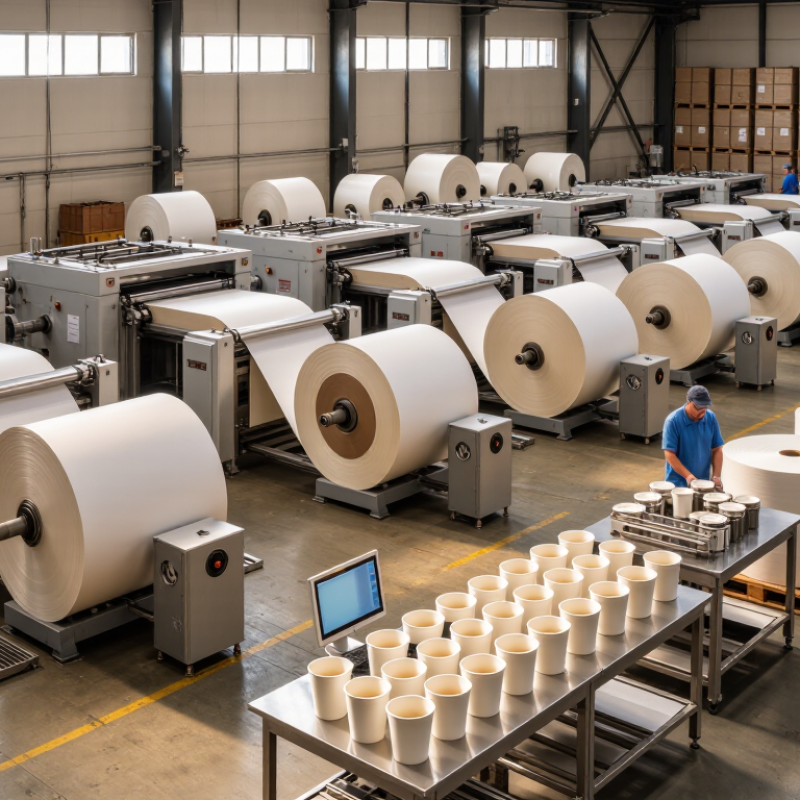
A paper cup raw material factory does more than sell paper reels. It converts fiber, coating, and production data into a stable base for cup manufacturing. Its role begins with selecting suitable paperboard for the cup’s size, filling temperature, and forming process. A professional factory should control grammage, moisture, stiffness, coating adhesion, and reel winding quality. These details affect side-seam strength and leakage resistance. Small variations can create large losses on a high-speed production line.
Ask the factory for technical data, test reports, and traceability records. Confirm whether each batch has a clear production code and inspection result. Food-contact documentation should match the intended market and application. Request samples, then test them on your own forming machine. This step matters. A material may look excellent but behave poorly during curling or heat sealing. I have found that supplier presentations often sound more precise than actual production conditions. Independent verification remains necessary.
Tips: Check reel edges, storage humidity, and delivery consistency. Compare several batches, not one attractive sample. Keep records of defects, machine settings, and operator feedback. A reliable factory should answer technical questions directly, admit limitations, and improve when evidence shows a problem. Perfect performance is unlikely. Honest correction matters more.
Identify Required Paper Cup Material Specifications
Choosing a reliable paper cup raw material factory starts with clear material specifications. A vague request for “good cup paper” creates costly misunderstandings. Define the paper grade, basis weight, coating type, and intended cup size. Common paper weights may range from 170 to 350 GSM, depending on volume and structure. The coating must resist liquid without creating strong odors or weak sealing points. Ask for food-contact test reports, coating data, and recent batch records.
Small details matter. Check paper moisture carefully, because excess moisture can cause curling during printing or forming. Confirm roll width, core size, sheet tolerance, and surface smoothness before production. The paper should run evenly through a forming machine, without frequent cracks around the rim. A Paper Cup Fan Factory should also explain how it controls stiffness, whiteness, and coating adhesion. Request samples from different batches, not only a perfect showroom sample.
Traceability is essential. Each delivery should show the production date, batch number, GSM result, and inspection status. I have found that technical documents can look complete while practical samples behave differently. Test the material under real conditions: cold drinks, hot beverages, stacking, and transport vibration. Do not rely only on a supplier’s confidence. A factory willing to discuss failed tests and corrective actions often appears more reliable than one promising flawless results.
Evaluate Factory Certifications and Production Standards
Choosing a reliable paper cup raw material factory starts with verified certifications and visible production standards. A certificate should match the factory’s actual process, not merely decorate an office wall. Check the issuing body, validity date, audit scope, and covered product range. Food-contact compliance must also suit your target market and cup application.
Walk through the production area if possible. Look for clean storage, sealed packaging, and clear separation between raw paper and finished rolls. A dependable PE Coated Cup Paper Roll Factory should control coating thickness, bonding strength, moisture, and roll tension. Ask for recent laboratory reports, batch records, and traceability samples. The factory should explain how it handles rejected rolls and customer complaints.
Small details matter. Is the coating surface even under inspection light? Are roll cores protected from dust? Can staff identify a batch within minutes? These answers reveal more than polished brochures. ISO-based quality systems can support consistency, but they do not replace daily supervision. I once assumed a complete certificate meant perfect production. That assumption was too simple. Standards may exist, yet implementation can weaken during busy seasons. Request an on-site audit, review corrective-action records, and compare test results from different batches before making a decision.
Check Raw Material Quality and Safety Controls
A reliable Paper Cup Factory should prove raw material safety before discussing price or production speed. Ask for the paperboard grade, supplier identity, batch number, and current certificate of analysis. The board should have controlled moisture, stable grammage, and no unusual odor. Inspect several cartons, not only one showroom sample.
Food-contact compliance needs documented testing. Request overall migration and specific migration reports from an accredited laboratory. Check inks, adhesives, coatings, and recycled fibers separately. If the material uses barrier chemicals, ask whether PFAS and other restricted substances were screened. Testing only the finished cup is useful, but it can hide the source of contamination. That weakness deserves attention.
A factory should show traceability from incoming rolls to shipped cartons. Batch records, retained samples, pest-control logs, and calibration records should be available during an audit. ISO Survey 2023 reported more than two million ISO management-system certificates worldwide, but certification alone does not guarantee safe paperboard. Verify the certificate scope and audit date. The supplier should also explain its response to failed tests, including product isolation and root-cause investigation.
In practice, place a small trial order first. Cut open several cups and examine the coating edge, seam, and bottom curl. Pour hot water into them and observe odor, leakage, and deformation after thirty minutes. I would not accept vague answers. Yet laboratory reports can contain gaps, and buyers sometimes overlook them under delivery pressure. That is where a careful factory evaluation becomes imperfect, but still necessary.
Assess Manufacturing Capacity and Supply Reliability
How to Choose a Reliable Paper Cup Raw Material Factory?
Choosing a reliable paper cup raw material factory requires more than checking monthly output. Manufacturing capacity must match your forecast, not just a sales promise. Ask for production records, machine numbers, shift schedules, and recent order volumes. A factory with several forming lines may still struggle during maintenance or seasonal demand. Walk through the plant if possible. Observe raw material storage, moisture control, roll handling, and finished-goods labeling. These details reveal process discipline. Ask how quickly the factory can replace a failed coating or cutting machine. The answer should include staff, equipment, and backup procedures.
Tips: Request a capacity plan for your expected volume. Compare normal output with peak output. Ask for lead times across three recent orders. Check whether safety stock is measured in tons, rolls, or production days. Confirm backup suppliers for paper, coating, inks, and packaging. Require batch records and pre-shipment inspection reports. A practical test order can expose delays that a factory tour hides. Keep the test realistic.
Supply reliability depends on communication as much as equipment. Confirm who handles urgent changes and how quickly they respond. A written schedule should show production dates, inspection points, loading dates, and transit buffers. Good factories report delays early, even when the message is uncomfortable. That honesty matters. Still, do not rely on promises alone. Review rejection rates, replacement procedures, and complaint response times. Some buyers overlook warehouse space. That can create bottlenecks. Even a capable factory may depend on unstable transport or one critical supplier. Check those risks before signing a long-term agreement.
How to Choose a Reliable Paper Cup Raw Material Factory? – Assess Manufacturing Capacity and Supply Reliability
| Assessment Dimension | Key Metric | Recommended Benchmark | Evidence to Request | Supply-Risk Interpretation |
|---|---|---|---|---|
| Production Capacity | Monthly output of cup-grade paperboard | Capacity should exceed your average monthly demand by at least 20%–30% | Production capacity statement, machine list, recent monthly output records | Limited spare capacity may cause delays during seasonal demand peaks |
| Production Lines | Number of operational coating, printing, slitting, or laminating lines | At least two suitable lines or a documented contingency plan | Equipment inventory, line specifications, maintenance schedule | Single-line dependence creates a high interruption risk |
| Capacity Utilization | Average utilization of available production capacity | Preferably below 85% during normal operating periods | Capacity planning reports and production schedules | Utilization above 90% leaves little room for urgent orders or repairs |
| On-Time Delivery | On-time-in-full delivery rate | At least 95% over the previous six to twelve months | Anonymized delivery performance reports and shipping records | A low or unverified rate indicates inconsistent planning or logistics control |
| Standard Lead Time | Time from approved order to dispatch | Clearly defined lead time, commonly 15–30 days for standard materials | Written production timeline, order confirmation, historical delivery data | Unclear lead times make inventory and launch planning difficult |
| Raw Material Stock | Availability of base paper, coating materials, inks, and packaging supplies | Critical inputs maintained at approximately 2–4 weeks of normal production | Inventory policy, stock records, approved supplier list | Just-in-time purchasing without backup suppliers increases interruption risk |
| Supplier Diversification | Qualified sources for critical inputs | At least two qualified sources for major raw materials where practical | Approved-vendor procedure and contingency sourcing plan | Single-source procurement can expose production to shortages and price shocks |
| Quality Control | Inspection coverage for basis weight, caliper, moisture, coating, and dimensions | Incoming, in-process, and final inspections documented for every production batch | Quality manual, inspection reports, calibration certificates, batch records | End-of-line-only inspection may allow defects to remain undetected |
| Food-Contact Compliance | Suitability of paper, coatings, inks, and adhesives for intended use | Current third-party test reports and declarations for the destination market | Migration test reports, declarations of compliance, material safety data | Missing or expired documents can create customs, regulatory, and recall risks |
| Corrective Action | Response time for quality complaints | Acknowledgement within 1 business day and corrective-action plan within 5 business days | Complaint procedure, anonymized corrective-action reports, response records | Slow responses often indicate weak traceability or quality ownership |
| Business Continuity | Preparedness for power, equipment, labor, transport, and material disruptions | Documented continuity plan with defined backup actions and responsible personnel | Business-continuity plan, emergency contacts, backup-power and maintenance records | No documented plan suggests extended recovery time after an incident |
| Traceability | Batch identification from raw materials through shipment | Every shipment traceable to production date, input batches, inspection results, and operators | Sample batch code, traceability procedure, recall simulation record | Poor traceability increases the scope and cost of quality investigations |
Compare Pricing, Customization, and Customer Support
Choosing a reliable paper cup raw material factory requires more than comparing the lowest quotation. A professional pe coated paper factory should explain paper thickness, coating weight, roll width, minimum order quantity, and shipping terms clearly. Ask for a cost breakdown, not just a final figure. A low price may exclude printing plates, testing, or protective packaging. Request physical samples and inspect the surface for pinholes, uneven coating, curling, and weak sealing. These small defects can cause leakage during cup forming.
Customization also deserves careful attention. Confirm whether the factory can match your required paper weight, coating type, roll size, and printing colors. Ask for a production proof before approving bulk manufacturing. Experienced suppliers should provide technical recommendations when your design is unsuitable for high-speed machines. Be cautious, though. My own assumption that more customization always means better results was sometimes wrong; unnecessary color layers increased cost without improving the finished cup.
Tips: Compare at least three detailed quotations. Check sample consistency across different batches. Ask how quickly customer service responds to technical questions. A dependable team should share inspection records, material specifications, and realistic production schedules. Clarify who handles damaged rolls, delayed shipments, or failed samples. Fast replies are useful, but accurate replies matter more. Keep every agreed detail in writing.
How to Choose a Reliable Paper Cup Raw Material Factory?
Compare pricing, customization capability, product consistency, and customer support using a practical procurement evaluation model.
Pricing should remain a major consideration, but consistent coating quality, suitable customization options, and responsive support are also essential for reducing production risk and maintaining stable supply.
FAQS
State the paper grade, GSM, coating type, cup size, roll width, and core size. Common weights range from 170 to 350 GSM. Vague requests create expensive misunderstandings. I sometimes underestimated core size, and that caused production delays.
Excess moisture can cause curling during printing or forming. Check surface smoothness, sheet tolerance, and stiffness before production. The paper should pass through forming equipment without rim cracks. Small variations matter.
Request food-contact test reports, coating data, batch records, and a current certificate of analysis. Ask for migration testing from an accredited laboratory. Review inks, adhesives, coatings, and recycled fibers separately. One finished-cup test may hide contamination sources.
Ask whether barrier materials were screened for restricted substances, including PFAS. Request the test method, laboratory details, and report date. Do not accept broad safety claims. The paperwork can still contain gaps.
Each delivery should show the production date, batch number, GSM result, and inspection status. Incoming rolls should connect to shipped cartons. Ask to review retained samples, calibration records, and pest-control logs. Traceability sounds dull, but it protects investigations.
Start with a small trial order. Inspect several cups around the coating edge, seam, and bottom curl. Fill them with hot water for thirty minutes. Then check odor, leakage, and deformation. Real testing beats showroom confidence.
Request at least three detailed quotations with cost breakdowns. Check whether prices include testing, printing plates, protective packaging, and shipping. Compare paper thickness, coating weight, roll size, and minimum order quantity. The cheapest offer may be incomplete.
Confirm paper weight, coating type, roll size, and printing-color limits. Request a production proof before bulk manufacturing. Ask how the supplier handles damaged rolls, delayed shipments, and failed samples. Fast replies help, but accurate replies matter more.
Conclusion
Choosing a reliable Paper Cup Raw Material Factory is essential for producing safe, durable, and consistent paper cups. Start by understanding the factory’s role, including its ability to supply food-grade paperboard, coatings, and other materials that match your production needs. Clearly define specifications such as paper weight, stiffness, moisture resistance, coating type, cup size compatibility, and printing requirements. A dependable supplier should also demonstrate recognized certifications, documented production standards, and strict quality management procedures.
Before making a decision, inspect how the factory controls raw material quality, hygiene, chemical safety, and batch consistency. Evaluate its manufacturing capacity, equipment, lead times, inventory planning, and ability to maintain stable supply during high-demand periods. Finally, compare pricing based on total value rather than cost alone, while considering customization options, sample approval, communication efficiency, after-sales service, and problem-solving support. The best factory should offer transparent cooperation, reliable delivery, consistent quality, and flexible solutions that support your long-term business goals.
Related Posts
-

2026 Best Paper Cup Raw Material in China Suppliers?
-

What is the Best Paper Cup Raw Material Manufacturer for You?
-
2026 Best High-Quality Wholesale Paper Cup Raw Material Selection Guide?
-

How to Make a Paper Cup Fan Step by Step Guide?
-
Top 10 Tips for Sourcing Paper Cup Manufacturing Suppliers?
-
The Hidden Benefits of Kraft Packaging: Why Eco-Friendly Choices Matter for Your Business

Blog Tags:


