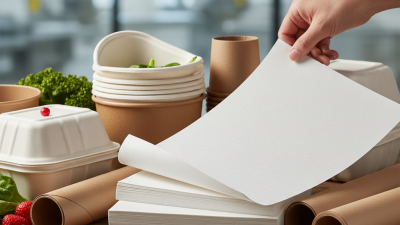
So, how do you choose the top uncoated cupstock paper manufacturers worldwide? It takes more than comparing company size or production volume. You’ve also got to look at fiber quality, basis weight, stiffness, printability, and food-contact documentation. These things directly affect how a paper cup behaves during forming, filling, transport, and even recycling.
This guide looks at established suppliers like Stora Enso, Metsä Board, Billerud, and Suzano. Their product ranges, mill capabilities, and regional service networks can vary a lot. Some focus on lightweight grades, while others lean toward strong folding performance or renewable fiber sourcing. Availability also shifts from market to market, so it’s worth checking current specs directly with each supplier.
Uncoated Cupstock Base Paper is often chosen for cups that get a coating or barrier treatment later in production. Its moisture resistance depends on the final converting process, not just the paper itself. That’s an easy distinction to miss. We compare technical data, certification practices, manufacturing experience, and customer support to build a more reliable overview. Still, no single ranking works for every application. A café chain might care most about fast delivery, while a converter may value stable reel quality and tight thickness tolerances. Testing is still essential. A supplier can look impressive on paper but perform differently on a specific forming line. So this guide treats manufacturer claims with care and points out where further verification makes sense.
Definition and Uses of Uncoated Cupstock Paper
Uncoated cupstock paper is a stiff, food-grade paperboard made for forming disposable cups and containers. Unlike coated cupstock, it has no plastic film or polymer layer applied to its main surface. Its natural fiber structure remains visible and slightly absorbent. Manufacturers typically control basis weight, thickness, stiffness, and folding performance. These properties help the board pass through cutting, creasing, and forming equipment without cracking.
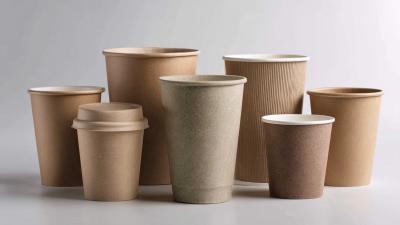
Its uses depend on the product design. Uncoated stock can support dry-food cups, bakery packaging, snack containers, sampling cups, and short-term serving applications. For hot drinks or watery products, an additional barrier may be necessary. This barrier can come from a separate lining, aqueous treatment, or another approved construction. Paper alone may soften. That detail is often underestimated. Responsible buyers should review food-contact documentation, fiber sourcing, moisture resistance, and forming-test results before selecting a mill or converter. In practice, laboratory data matters, but production trials reveal problems that specifications may miss.
Tips: Check the board after creasing, not only before forming. Look for edge splitting, odor, curl, and liquid penetration. Ask for samples under real filling temperatures. Confirm whether the paper is designed for direct food contact in the target market. Recyclability claims also require careful review, because local collection systems and barrier materials can change the final outcome. A small pilot run is usually wiser than a large first order.
Key Properties of High-Quality Uncoated Cupstock
Key Properties of High-Quality uncoated cupstock
High-quality uncoated cupstock begins with stable fiber formation. A smooth, even sheet supports clean forming and reliable heat sealing. Typical basis weights range from 170 to 350 g/m², depending on cup size and strength needs. The right stiffness prevents sidewall collapse during filling. Too much stiffness, however, can create cracking around the rim.
Moisture resistance matters greatly. A controlled Cobb value helps the board resist water absorption during short service periods. Surface porosity also affects coating adhesion, ink holdout, and sealing performance. According to CEPI’s 2023 statistics, Europe’s paper recycling rate reached about 82.5%. This supports fiber recovery, but cupstock design still matters. Uncoated cupstock without suitable barrier treatment may lose strength quickly. That point is sometimes overlooked. Brightness, formation, and low dust levels improve visual quality and production stability. ISO 536 basis-weight testing and ISO 5636 Cobb testing provide useful comparison points between suppliers.
Tips: Check samples after forming, not only as flat sheets. Inspect the rim, fold lines, and bottom seal. Ask for moisture, stiffness, and migration test data. These details reveal more than a glossy specification sheet. In practice, I would also test paper from different production lots. Small variations can affect machine speed. It is tempting to judge quality by appearance alone. That is not enough. A slightly rougher sheet may perform better if its fiber bonding is stronger. Manufacturers should document each result and review failures honestly. Perfect paper does not exist. Consistent paper is the real target.
Top Uncoated Cupstock Paper Manufacturers Worldwide? – Key Properties of High-Quality Uncoated Cupstock
| Key Property | Typical Specification Range | Unit | Common Test Method | Why It Matters for Cup Production |
| Basis Weight | 170–350 | g/m² | ISO 536 | Determines cup rigidity, material consumption and compatibility with forming equipment. |
| Thickness | 220–500 | µm | ISO 534 | Supports sidewall stiffness and helps maintain the intended cup shape during filling and handling. |
| Bulk | 1.25–1.55 | cm³/g | Calculated from basis weight and thickness | Higher bulk can improve stiffness and insulation without requiring excessive basis weight. |
| Stiffness | Product-dependent; commonly specified by machine and cup size | mN or gf·cm | ISO 2493 or TAPPI T 489 | Reduces deformation, improves stackability and provides a better hand feel for the finished cup. |
| Tensile Strength | Machine direction generally higher than cross direction | kN/m | ISO 1924-2 | Helps the paper withstand die cutting, printing, creasing and forming without tearing. |
| Tear Resistance | Specified according to basis weight and end-use requirements | mN | ISO 1974 | Improves resistance to damage during converting, transport and consumer use. |
| Surface Smoothness | Controlled, uniform uncoated surface | mL/min or µm | ISO 8791-4 or ISO 5627 | Promotes consistent ink transfer, clean graphics and reliable heat-seal or barrier-layer application. |
| Surface Absorption | Cobb 60 value selected for the intended barrier system | g/m² | ISO 535 | Controls how quickly water-based inks, adhesives or applied coatings penetrate the paper surface. |
| Moisture Content | Typically 4.0–7.0 | % by mass | ISO 638-1 | Balanced moisture helps minimize curl, dimensional changes and feeding problems during cup forming. |
| Dimensional Stability | Low expansion and shrinkage under normal converting conditions | % change | ISO 5635 or internal conditioning protocols | Maintains accurate printing registration, die-cut dimensions and side-seam alignment. |
| Formation | Uniform fiber distribution with minimal visible cloudiness | Visual or formation index | Visual inspection or laboratory formation analysis | Improves appearance, print uniformity and mechanical consistency across the sheet or reel. |
| Brightness | Generally 80–95 | % ISO | ISO 2470-1 | Provides a clean visual background and improves the contrast of printed designs. |
| Opacity | Typically 88–99 | % ISO | ISO 2471 | Limits show-through and supports consistent color appearance, especially for double-sided printing. |
| Food-Contact Compliance | Must meet applicable local food-contact requirements | Regulatory status | Applicable food-contact legislation and migration testing | Confirms suitability for cups intended to hold beverages or other food products. |
| Recyclability and Fiber Source | Preferably virgin fiber from responsibly managed sources and compatible with local recycling systems | Certification or declaration | Chain-of-custody documentation and recyclability assessment | Supports responsible sourcing, end-of-life recovery and compliance with customer sustainability requirements. |
Note: The ranges shown are general industry reference values. Final specifications should be agreed with the paper supplier according to cup size, forming equipment, printing process, beverage temperature and barrier-coating system.
Leading Uncoated Cupstock Paper Manufacturers Worldwide
Leading Uncoated Cupstock Paper Manufacturers Worldwide
Uncoated cupstock paper supports hot drinks, cold beverages, and takeaway food containers. It usually uses bleached or natural fiber, without a plastic coating at the paper mill. According to FAOSTAT Forestry Production and Trade data, global Paper And Paperboard production exceeded 420 million tonnes in 2023. Cupstock represents only a small share, yet demand is expanding with foodservice consumption and fiber-based packaging goals.
Leading manufacturers worldwide typically compete through fiber consistency, moisture resistance, and converting performance. Uncoated Paper Cup Base Paper must run smoothly through printing, cutting, folding, and forming equipment. A practical grade often balances stiffness with controlled porosity. Too much absorbency can weaken the cup wall. Too little can reduce bonding performance. Small differences matter.
Smithers’ recent packaging analysis identifies foodservice packaging as an important growth area for paper-based materials through 2028. Reported market estimates vary because analysts define cupstock differently. Some include coated boards, while others count only base paper. That inconsistency deserves attention. Buyers should examine basis weight, Cobb value, tensile strength, brightness, and reel moisture rather than trust broad rankings. Manufacturing scale helps, but it does not guarantee stable converting results. A sample reel, tested under real production conditions, often reveals more than a sales brochure.
Top Uncoated Cupstock Paper Manufacturers Worldwide
Uncoated cupstock is commonly produced across a broad basis-weight range of approximately 150–350 g/m². The chart shows representative basis weights frequently used for different food and beverage packaging applications.
Basis weight is measured in grams per square metre (g/m²). Actual specifications vary according to forming technology, stiffness requirements, cup size, and end-use conditions.
Manufacturing Processes and Material Standards
uncoated paper for cupstock begins with fiber selection, not coating chemistry. Mills usually combine virgin kraft pulp with carefully screened recycled fiber. The final blend must support forming, printing, and food-contact safety. FAO forestry statistics reported global paper and paperboard production above 400 million tonnes in recent years. That scale increases pressure on fiber traceability and energy efficiency.
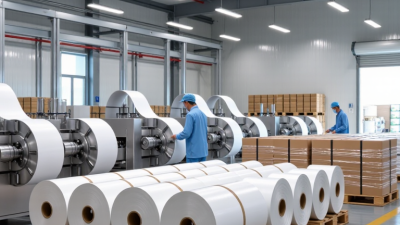
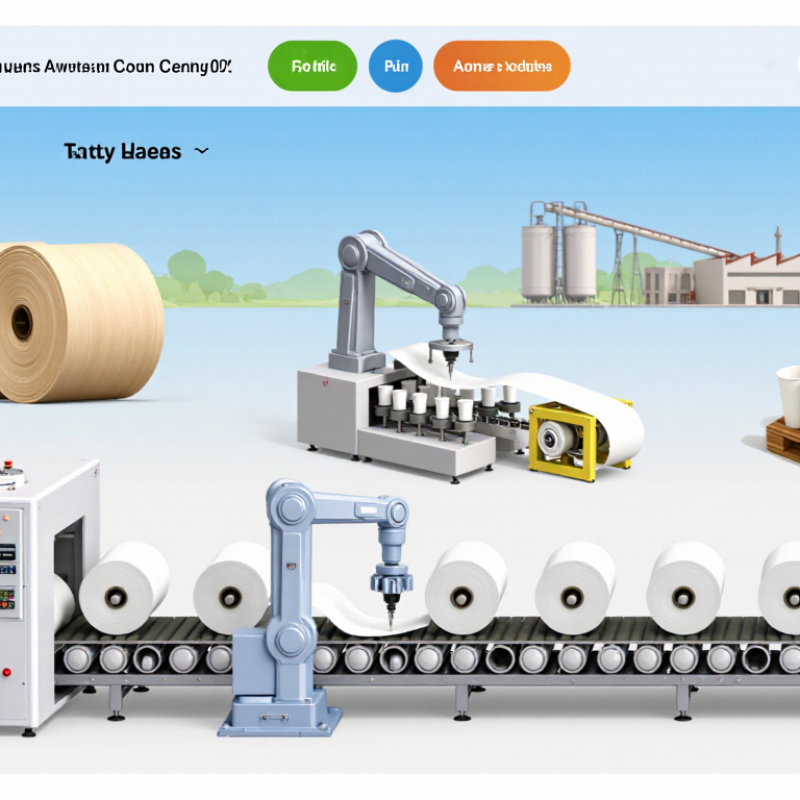
Manufacturers refine pulp through washing, bleaching, refining, and controlled drying. Refining improves bonding, but excessive treatment reduces drainage and slows production. On a cupstock machine, forming stability matters as much as smoothness. Calendering can improve surface uniformity, although too much pressure may reduce bulk. A small defect becomes visible around the cup seam.
Material standards create measurable checkpoints. ISO 536 defines grammage, while ISO 534 measures thickness. ISO 2470 evaluates brightness, and ISO 8791 supports roughness testing. The TAPPI T 441 Cobb method checks water absorption, which is critical before extrusion or barrier application. Industry testing reports commonly show cupstock grades near 180–350 g/m², depending on cup size and stiffness requirements.
The European pulp and paper industry’s recent CEPI statistics continue to highlight energy use, recovered fiber, and production efficiency as major performance indicators. Yet laboratory strength can mislead. A board may pass dry compression tests but fail after humidity exposure. This remains an imperfect area. More mills should report moisture-conditioned results, not only ideal laboratory values. The best uncoated paper specifications connect fiber origin, machine settings, and end-use performance.
Sustainability Practices in Cupstock Paper Production
Sustainability in cupstock paper production begins with responsible fiber sourcing. Mills should verify forest origin, chain-of-custody records, and supplier audit results. Recycled fiber can reduce pressure on virgin resources, but it may weaken stiffness. That trade-off requires careful formulation.
The FAO Global Forest Resources Assessment 2020 reported 420 million hectares of forest loss since 1990. However, the rate of net forest loss slowed during 2015–2020. Cupstock manufacturers can respond through certified fiber systems, lightweight design, and efficient pulping. Lightweighting matters. Every gram removed reduces material demand across millions of cups.
Coating selection also affects end-of-life recovery. Water-based barriers may support recycling in suitable systems, while complex multilayer structures can challenge repulping. The Confederation of European Paper Industries reported a 79.3% paper recycling rate in Europe for 2022. This figure covers paper broadly, not every cup. That distinction matters. The United States Environmental Protection Agency recorded a 68.2% paper and paperboard recycling rate using 2018 data. Cup recovery can be lower because food residue and collection gaps interfere.
Production data should include water consumption, thermal energy, chemical inputs, and greenhouse-gas emissions. Independent life-cycle assessments improve credibility, especially when they disclose assumptions. Some sustainability claims remain too broad. A recyclable cup is not automatically recycled. Mills should test actual collection, sorting, and repulping conditions before making public claims. The evidence may expose uncomfortable weaknesses. That is useful.
How to Evaluate and Select a Global Supplier
Top Uncoated Cupstock Paper Manufacturers Worldwide?
When evaluating a global supplier, assess more than price and production volume. Experience matters. Ask for technical data, recent test results, and customer references from comparable markets. Check the basics. Confirm basis weight, caliper, brightness, moisture control, and roll consistency. A polished sample can mislead. I once saw a strong-looking sheet perform poorly during high-speed forming.
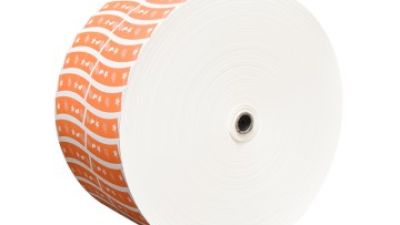
Request a recent uncoated paper roll for independent testing. Measure stiffness, surface strength, curl, dust, and printability. Compare results with your equipment, not only laboratory figures. Review the supplier’s quality system, batch traceability, complaint process, and corrective-action records. Reliable producers explain failures clearly. Vague answers deserve caution.
Global sourcing also requires practical verification. Examine export experience, packaging protection, lead times, backup capacity, and communication across time zones. Ask how the supplier manages fiber sourcing and environmental documentation. Claims should be supported by current records, not attractive language. A factory audit, either in person or remotely, can reveal storage problems, weak inspection routines, or overloaded machinery. That takes time. It is still worthwhile.
Do not select a supplier from one successful trial. Run repeat orders and monitor defects, delivery accuracy, and forming performance. Consider total cost, including waste, freight, testing, and production downtime. My own evaluation process is not perfect; supplier conditions change, and early assumptions can age badly. Keep reviewing the evidence.
Low-MOQ Disposable Paper Cup Raw Materials: Smithers & Grand View Research Insights on PE-Coated Printing Paper Rolls
Low-MOQ disposable paper cup production is creating demand for flexible supplies of PE-coated printing paper rolls. According to a 2024 global market assessment, the paper cup sector was valued at approximately USD 13.7 billion in 2023 and is projected to grow at about 3.6% annually through 2030. For small and emerging converters, low minimum order quantities can reduce inventory pressure while enabling seasonal designs, limited campaigns, and market testing. Roll materials should offer consistent basis weight, smooth printability, reliable PE adhesion, and stable performance during die-cutting and cup forming.
Recent specialist packaging forecasts also indicate that paper-based foodservice packaging will continue benefiting from convenience consumption and demand for recyclable or fiber-based formats. In this environment, PE-coated printing paper rolls with customizable widths, grammages, and coating levels can support efficient short-run production. Typical cupstock specifications may range from around 170 to 350 gsm, depending on cup size and structural requirements, while food-contact compliance, low odor, and uniform coating coverage remain essential purchasing criteria. Suppliers that provide small-batch ordering, accurate color reproduction, moisture resistance, and dependable roll consistency can help converters control waste and respond quickly to changing customer preferences.
FAQS
Mills should verify forest origins, chain-of-custody records, and supplier audits. Recycled fiber can reduce virgin resource use. However, it may lower stiffness. Formulation must balance both needs.
Lightweighting removes unnecessary grams from each cup. Small reductions matter across millions of units. Efficient pulping and certified fibers also help. The trade-off is not always simple.
Water-based barriers may support recycling in suitable systems. Complex multilayer coatings can make repulping difficult. A recyclable cup is not automatically recycled. Collection conditions matter.
Food residue can contaminate recovered fiber. Collection gaps may keep used cups out of recycling systems. Paper recycling statistics do not represent every cup. That distinction matters.
Request water use, thermal energy, chemical inputs, and greenhouse-gas emissions. Independent life-cycle assessments improve credibility. Review the stated assumptions carefully. Some claims remain too broad.
Ask for basis weight, caliper, brightness, moisture control, and roll consistency. Request recent test results and comparable customer references. A polished sample can mislead. Test the material on your own equipment.
Use a recent paper roll for independent testing. Measure stiffness, surface strength, curl, dust, and printability. Compare laboratory results with high-speed forming performance. One strong trial proves little.
Review batch traceability, complaint handling, and corrective-action records. Check export experience, packaging protection, lead times, and backup capacity. Inspect storage areas and machinery when possible. Remote audits can still reveal problems.
No. Run repeat orders and monitor defects, delivery accuracy, and forming performance. Calculate waste, freight, testing, and production downtime. My evaluation process is not perfect. Supplier conditions change, so old assumptions need review.
Conclusion
Uncoated Cupstock Paper is a specialized paperboard designed for producing disposable cups, food containers, and other packaging applications that require strength, stiffness, and reliable forming performance. High-quality grades typically offer consistent thickness, good printability, smooth converting performance, and sufficient resistance to moisture and heat when paired with suitable functional treatments. This article introduces leading global manufacturers by focusing on their production capabilities, quality control systems, material consistency, and ability to serve international markets, without relying on brand-specific comparisons.
It also explains key manufacturing processes, including fiber preparation, papermaking, drying, finishing, and quality inspection, while highlighting the importance of responsible sourcing and recognized material standards. Sustainability considerations include renewable fiber management, efficient water and energy use, waste reduction, recyclable design, and transparent environmental reporting. When selecting a global supplier, buyers should evaluate product specifications, technical support, production capacity, delivery reliability, certification documentation, customization options, and total cost. These factors help ensure that Uncoated Cupstock Paper meets both operational requirements and evolving sustainability expectations.