







Saudi Arabia Paper for Paper Cup Sourcing: How PE Coated Paper and Cupstock Meet 2026 SFDA/SABER Compliance and the GCC 5% Tariff
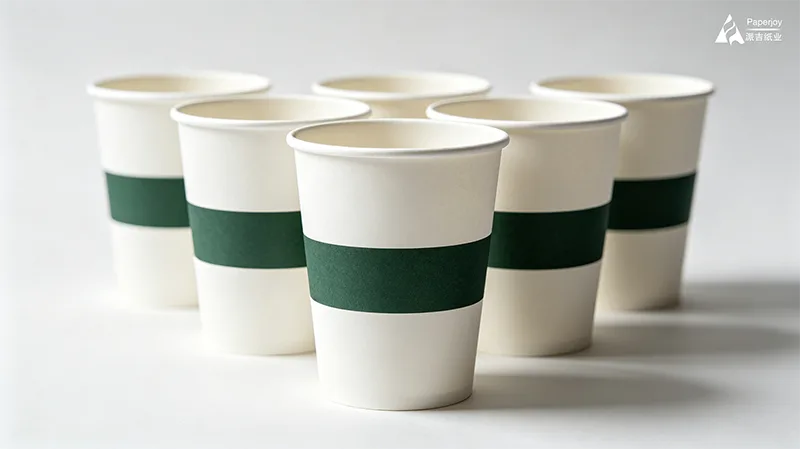
In 2026, Saudi Arabia — the largest economy in the Gulf and the focal market of Vision 2030’s tourism and F&B investment — is seeing sustained local demand for single-use cups, lids and food-contact packaging. For local Saudi cup makers and buyers, choosing the right Saudi Paper For Paper cup — PE coated paper, cupstock(paper Cup Base Paper) and paper cup fan (sidewall blank) — is shifting from a cost question to an access question. The reason is Saudi’s layered food-contact regime: the SFDA (Saudi Food and Drug Authority) regulates materials, the SASO (Saudi Standards, Metrology and Quality Organization) sets technical regulations, and the SABER platform mandatorily requires a PCoC (Product Certificate of Conformity) plus SCoC (Shipment Certificate of Conformity) for customs clearance; meanwhile the GCC common external tariff levies 5% on HS 4811 coated paper and Saudi adds a 15% VAT. This article gives Saudi buyers and cup makers a ready-to-use material-selection and landed-cost playbook that turns verifiably compliant into a deal-closer with Saudi customers.
Market Context: Why Saudi’s Cup and Food-Contact Packaging Demand Keeps Rising
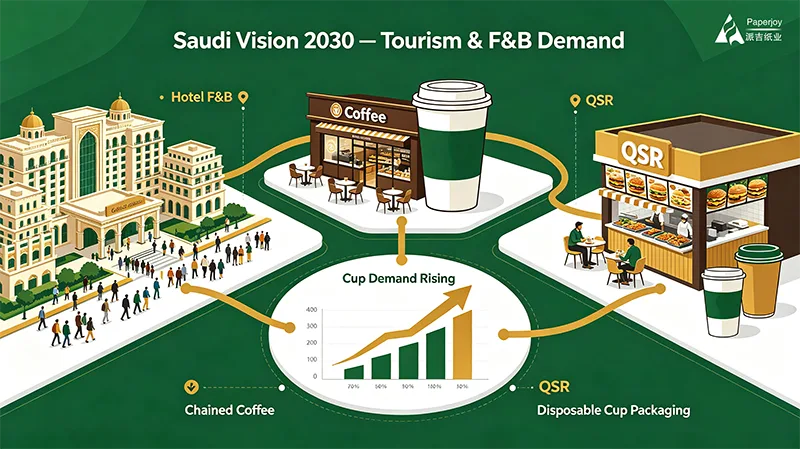
Saudi’s cup demand rises along three lines. First, the structural expansion under Vision 2030: Saudi targets 150 million annual visits by 2030, and hotels, chained coffee, QSR and major events drive steady demand for single-use food-contact packaging, with PE coated paper and cup bottom rolls forming a complete chain. Second, Saudi’s heavy import reliance — food-contact paper import dependence is high (industry estimates roughly 90%–95%), with China supplying about 40%–50% of Saudi paper imports (industry estimate, not official statistics) — and Nanning Paperjoy Paper Industry (Paperjoy) supplies as a source factory with stable ocean-shipment lead times and pre-ready compliance documents for Saudi cup makers. Third, plastic-reduction and sustainability trends across the GCC inversely lift procurement of compliant paper-based substitutes, so the combination of Double PE Coated Paper (cold drinks ≤60°C) with Single PE Coated Paper (hot drinks 80–95°C, delivery; PE coating’s practical heat tolerance is about 90–100°C) is rising, and buyers prefer 1–6 color flexo-printed paper cup fan to meet brand expectations on packaging quality.
2026 Compliance Gate: SFDA Regulation, SABER Dual Certificates and SASO Food-Contact Standards
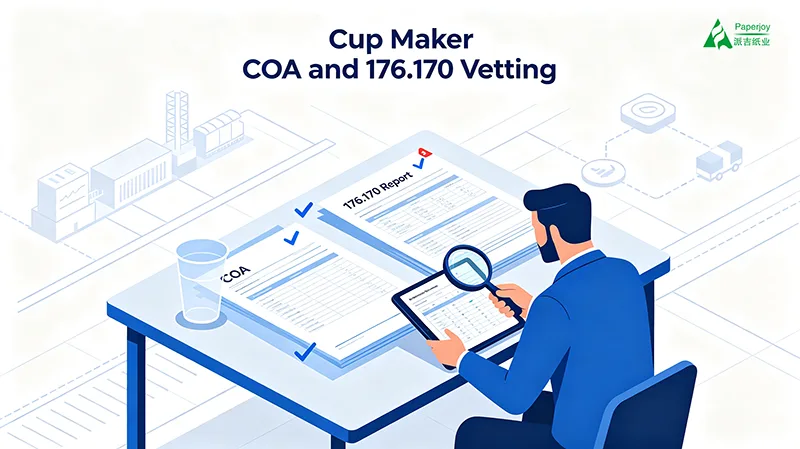
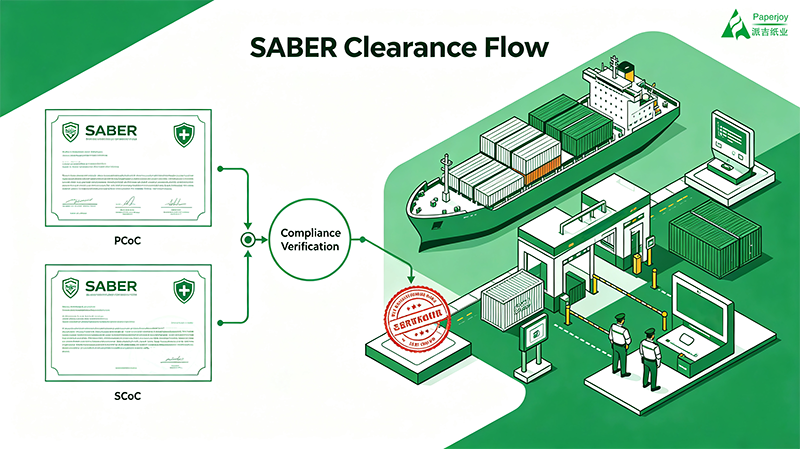
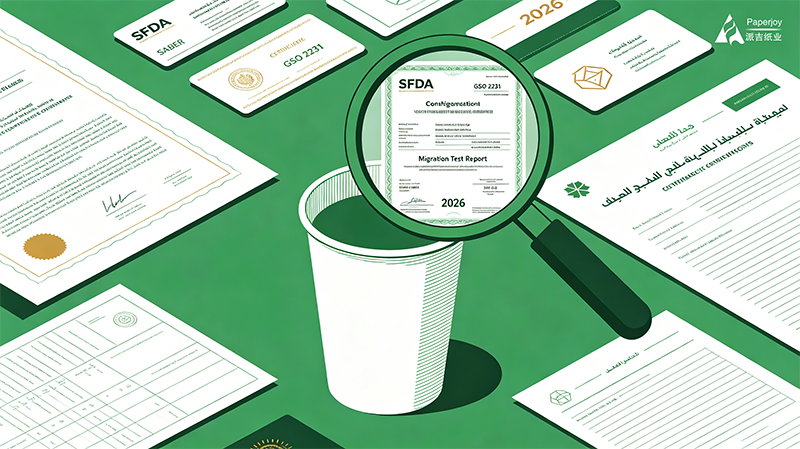
Saudi’s 2026 food-contact packaging has two key gates. First, the SFDA regulatory framework: the Saudi Food and Drug Authority requires food-contact materials to meet GSO 2231 (General Requirements for Food Contact Materials), GSO 839:2021 (Food Packages – Part 1: General Requirements, whose scope expressly covers paper and carton packages) and GSO 2700:2022 (Migration Limits of Food Packages); the PE coating, being a plastic material, additionally falls under GSO 1863:2021 (Food Packages – Part 2: Plastic Packages – General Requirements). Note that the current GCC standards system has no dedicated compositional standard for paper food-contact articles, so paper-based compliance runs through the general requirements and migration-limit clauses above, broadly aligned with FDA 21 CFR 176.170 and GCC (GSO) benchmarks. Second, mandatory SABER dual certificates: food-contact materials covered by SASO technical regulations must be registered by the importer on the SABER platform for a PCoC (one-year validity, reusable across batches of the same material) and a per-shipment SCoC; since 2025 the rules require certificates to be issued before arrival and the SCoC to be bound to the bill of lading — post-arrival re-issuance is treated as a violation and fails clearance outright; from 2026 SABER uses the 12-digit Saudi customs code synchronised with ZATCA, and certificates carrying superseded codes show as invalid (per SASO/SABER platform rules and third-party conformity-body disclosures, which also report higher-risk categories cut to a 6-month PCoC while ordinary categories extend to 2 years — always defer to the platform’s current rules). Labels must be in Arabic (or Arabic-English bilingual) marking “for food contact” with the fork-and-glass symbol, country of origin “Made in China”, manufacturer and batch number. Paperjoy advises Saudi buyers to request SGS reports, FDA 21 CFR 176.170 conformance and FSC-COC at order confirmation to cover SFDA/SABER multi-standard verification.
Material Selection: How PE Coated Paper, Cupstock and Paper Cup Fan Match Saudi Lines
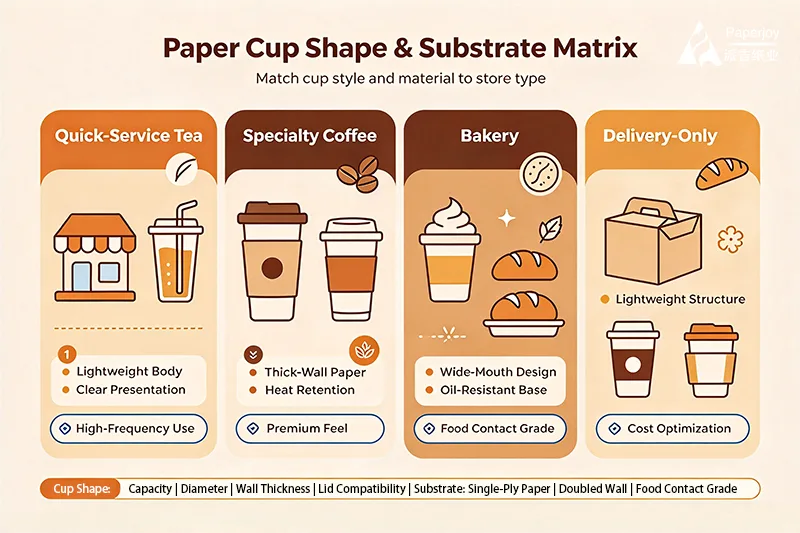
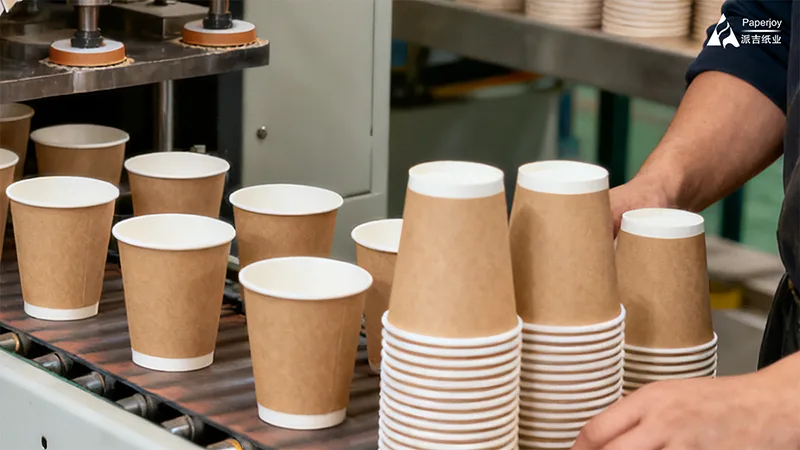
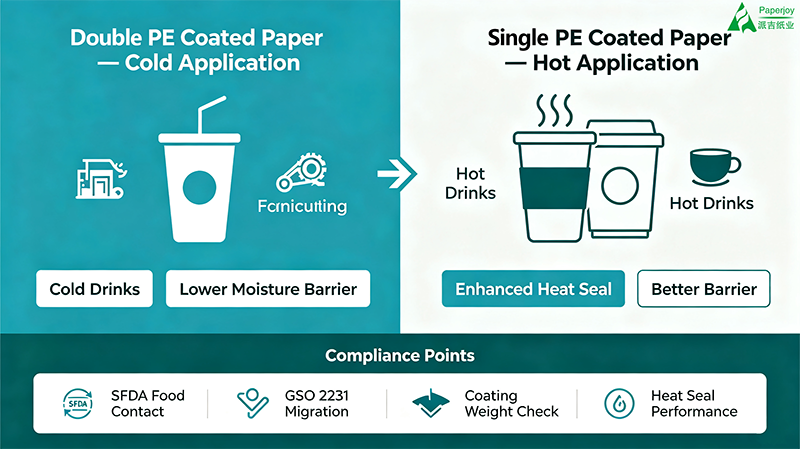
Matching base materials to Saudi lines splits into three tiers. Cold and ambient (≤60°C): choose Single PE Coated Paper, 150–350 gsm, with cup bottom rolls for leak resistance, for iced cups and yogurt cups. Hot drinks and delivery (80–95°C): choose Double PE Coated Paper for stable liquid resistance, suiting milk tea and coffee takeaway. Forming tier: paper cup fan is flexo-printed in 1–6 colors and die-cut to match Saudi cup machines. Paperjoy supplies as a source factory with PE coating matching FDA 21 CFR 176.170 and SGS third-party testing (PFAS-free, migration reports); full FSC-COC and ISO 9001 available. Jumbo rolls from 5 tons, die-cut from 3 tons (15 tons or more improves freight economics), standard lead time 15–25 days, reliable ocean shipment with pre-ready compliance documents cuts customs friction. For buyers who value halal supply chains, Paperjoy can supply raw-material auxiliary statements for the buyer’s own halal supply-chain audit — but food-contact paper in Saudi has no mandatory halal certification, and Paperjoy does not claim the product carries a Halal certificate; for compostable-demand markets, Bio-PE coated paper is an option but only with OK Compost Industrial, EN 13432 or ASTM D6400 certification — avoid unsubstantiated claims. Note that GCC/Saudi has separate control over compostable claims: even with EN 13432 or other Western certifications, one cannot automatically label the product ‘compostable’ in Saudi Arabia — Saudi official recognition is required. Buyers should write basis weight, PE coating weight and heat-seal strength into the order spec and verify at landing with COA measured values.
Cost & Channel: Optimizing Landed Cost under the GCC 5% Tariff and 15% VAT
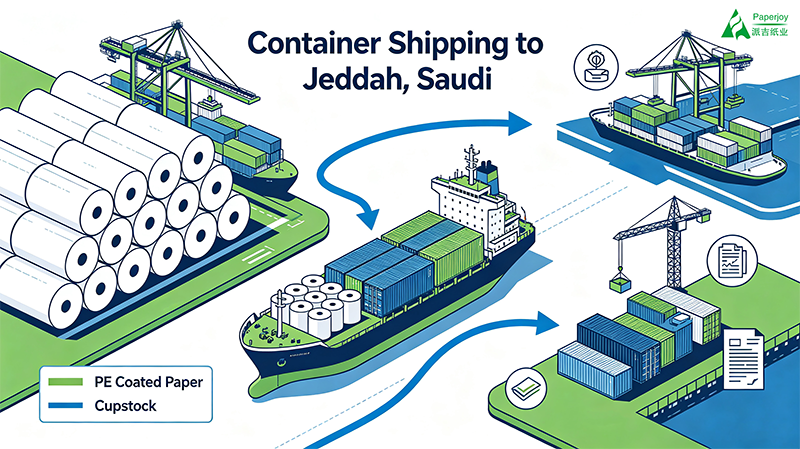
Landed-cost optimization hinges on tariff structure and supply-chain maturity. PE coated paper (HS 4811) in Saudi falls under the GCC common external tariff, where the base rate for most non-GCC origins (including China) is 5% (on CIF value), plus Saudi’s 15% VAT; note that FTAs such as RCEP do not cover Saudi Arabia, so China-origin paper cannot use preferential rates, but China is already among the largest supply sources for Saudi paper (40%–50% of import volume, industry estimate), and mature ocean lanes with pre-ready compliance documents thin out per-unit logistics cost. For price-sensitive Saudi cup makers, Paperjoy suggests bundling batch MOQ plus reliable ocean-shipment lead time plus complete documentation (SABER/COA/SGS) rather than judging PE coated paper unit price alone; above 15 tons, per-unit ocean and customs costs thin out markedly, and with the predictability of the GCC 5% tariff the total landed cost becomes more stable and controllable. Tariffs, VAT and SABER rules change with SASO/SFDA updates; all information is for procurement reference only and does not constitute a legal or customs guarantee. Specific rates and VAT depend on Saudi Customs and ZATCA’s current rules; the above is a forward estimate from public rules, not a quoted price.
Last updated: September 2026
FAQ
Q1: How far in advance of arrival must the SABER certificate be applied for?
A1: Since 2025, SABER rules require both PCoC and SCoC to be issued before the goods arrive, and the SCoC must be bound to the bill of lading. Saudi buyers should start the PCoC at order confirmation and complete the SCoC before shipment to avoid clearance failure caused by post-arrival re-issuance.
Q2: What is the difference between PE coated paper and cupstock?
A2: PE coated paper is a roll or sheet substrate with one or two PE coatings, focused on liquid resistance and heat sealing; cupstock is the forming base paper for cups (often PE-coated), determining cup stiffness, printability and die-cut performance. They are used together: cupstock forms the cup, PE coating provides the food-contact barrier.
Q3: What are Saudi Arabia’s requirements for compostable cup claims?
A3: GCC/Saudi has separate control over compostable claims. Even with EN 13432, OK Compost or ASTM D6400 certifications, one cannot automatically label the product ‘compostable’ in Saudi Arabia — Saudi official recognition is required; unsubstantiated claims may create compliance risk.
Contact Information
E-mail: info@nnpaperjoy.com
Call Us: 0086-0771-4925950
Whatsapp/WeChat: 0086-14795799575
Web: www.paperjoypaper.com